In the cold Tuscan months we choose to present a flower of taste that seems to cover itself in spiky thorns in order to protect its taste. This is the Artichoke.
History
Native to the Mediterranean. Artichokes were known to the Greeks and were considered a delicacy in Rome. The artichoke enjoyed by the Greeks and the Romans was  not the globe (French) artichoke or the thistle flower head whose petal bases and "heart" we eat today and the actual name is a corruption, via the Italian, of the Arabic al'qarshuf, for some reason the Latin word cynara did not survive in the Romance languages. However, the Italians make an apéritif called Cynar, from artichokes. not the globe (French) artichoke or the thistle flower head whose petal bases and "heart" we eat today and the actual name is a corruption, via the Italian, of the Arabic al'qarshuf, for some reason the Latin word cynara did not survive in the Romance languages. However, the Italians make an apéritif called Cynar, from artichokes.
A Florentine’s Discovery
Although artichokes have always grown in Sicily, they were first cultivated near Naples in the 15th century. Forgotten by the aristocracy during the Middle Ages, the artichoke was rediscovered and revived during the Renaissance by Filippo Strozzi in Florence around 1466. Becoming a favorite dish of the Medici family, artichokes were taken to France in the 16th century, where they became very popular in French cooking. Catherine de' Medici was said to love them so much, she often fainted from eating too many. Artichokes were suspected to have powerful aphrodisiac properties, and women were regularly forbidden to eat them. and revived during the Renaissance by Filippo Strozzi in Florence around 1466. Becoming a favorite dish of the Medici family, artichokes were taken to France in the 16th century, where they became very popular in French cooking. Catherine de' Medici was said to love them so much, she often fainted from eating too many. Artichokes were suspected to have powerful aphrodisiac properties, and women were regularly forbidden to eat them.
Our Suggestions
There are more than 50 varieties of artichokes grown worldwide, in all cases
they should never be cooked in an aluminum pot, as they tend to turn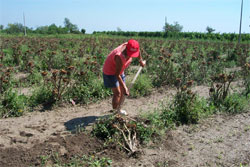 gray. Add sugar, half a lemon or cider or white wine vinegar, and salt when cooking to retain color and obtain a better flavor. In Italy, where the artichoke is known as carciofo, women at the market stalls usually rub two together before making a selection. If the artichokes make a little squeak on contact, they are deemed fresh. If they are muto, "silent", the ladies simply pass them by as they are no longer considered fresh. gray. Add sugar, half a lemon or cider or white wine vinegar, and salt when cooking to retain color and obtain a better flavor. In Italy, where the artichoke is known as carciofo, women at the market stalls usually rub two together before making a selection. If the artichokes make a little squeak on contact, they are deemed fresh. If they are muto, "silent", the ladies simply pass them by as they are no longer considered fresh.
Our Restaurant awaits at a Perfect Distance
Only distance helps us see a place and even a story in a clear manner, and there is a perfect distance, one where we are not too close or too far so as not to see but the outline of the matter.
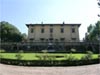
In this exact point there is a hill and in a former oil mill which awaits from four hundred  years we find a story to live or better to revive. Time seems to have stopped and in this same way our senses could be captured like long ago with only few differences, the main characters and public changes day after day like always, but feelings do not fleet and remain the same. From this hill the view of the city is perfect, we see Florence and her beauties, reliving her glories but not hearing her sounds which have become noises and not breathing her air now not pure. years we find a story to live or better to revive. Time seems to have stopped and in this same way our senses could be captured like long ago with only few differences, the main characters and public changes day after day like always, but feelings do not fleet and remain the same. From this hill the view of the city is perfect, we see Florence and her beauties, reliving her glories but not hearing her sounds which have become noises and not breathing her air now not pure.
We will be Elisabetta Piazzesi’s and Pedro Di Vito’s guests and the constant argument of our stay will be, the perfect distance. You will notice the nearly mathematical if not geometrical way in which everything revolves around the strettoio positioned in the center of the long
room, and also in the relationship created between hosts and guests, a brief but desired coexistence where guests happily agree to listen to Pedro’s views and the exchange in opinions which occurs is wanted by all. The atmosphere is that of a home, perfumes can initially be distinguished but slowly become a single aroma, that of dishes belonging to the tuscan tradition. The strettoio, this antique oil press that was once used to make the precious green gold flow, is massive and imposing and gives us that feeling  of wonderful solidity, the same which the food served gives us, dishes that do not interpret but that are history. Elisabetta author of numerous books on tuscan cuisine is the main actress although she remains behind the scenes knowing how to express the love for what she does through Pedro who guides us in our choices and on how to combine them with the right wines which inevitably complete the food. The menu changes as the seasons and their offerings, in complete respect we find satisfaction in rediscovering certain tastes, Peposo all’Imprunetana, Tagliata, but also well-known Ribollita and poor soups which yet are rich in taste. of wonderful solidity, the same which the food served gives us, dishes that do not interpret but that are history. Elisabetta author of numerous books on tuscan cuisine is the main actress although she remains behind the scenes knowing how to express the love for what she does through Pedro who guides us in our choices and on how to combine them with the right wines which inevitably complete the food. The menu changes as the seasons and their offerings, in complete respect we find satisfaction in rediscovering certain tastes, Peposo all’Imprunetana, Tagliata, but also well-known Ribollita and poor soups which yet are rich in taste.
Within this thick wall room the aesthetic experience described by E.Kant (although antithetic since the object is consumed) could occur, here the eye is prepared to receive beauty. In the slow ascent towards villa “Le Lepricine” in the overwhelming view which seems to wink at Florence, in the descent to the olive-press, seeing the strettoio, the fireplaces, furniture and the sumptuously decked tables the guest crosses the necessary phases which prepare his view to the experience described by Kant. The peak is reached in our palate since ancient tastes patiently prepared are introduced like ancient memories of a remote past. The philosopher explains that among object and subject there must be a distance and here although we are subm erged by beauty there is a distance. Elisabetta creates it with her innovative menu, a title which diminishes the actual menu she offers, in contrast with the traditional one where creative details give that harmony of contemporary research without overwhelming the values this restaurant wants to maintain. Potato tortelli from the Mugello tradition with asparagus and Colonnata lard or mezzepenne with Cinta Senese ragu, here extremely refined tuscan ingredients are put together with modern know how. erged by beauty there is a distance. Elisabetta creates it with her innovative menu, a title which diminishes the actual menu she offers, in contrast with the traditional one where creative details give that harmony of contemporary research without overwhelming the values this restaurant wants to maintain. Potato tortelli from the Mugello tradition with asparagus and Colonnata lard or mezzepenne with Cinta Senese ragu, here extremely refined tuscan ingredients are put together with modern know how.
We are within a painting where order represents antique chaos where roles, objects and subjects move at unison to make your stay a visit through time staying at a perfect distance, overwhelming us yet giving us the chance to reflect.
In order to keep in touch and updated
on all our upcoming events and news,
please join our facebook page click here and sign in you too will be a Good
Tastes of Tuscany Fan

|