Hello friends,
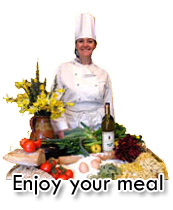
Flowers are a treat to the eyes, and sometimes a treat to our stomach too! Can’t believe that? Let’s get it clearer. The gastronomic use of flowers began some thousands of years ago and it was first time recorded in about 140 B.C. Traditional foods of many cultures have included flowers in their recipes. Daylily buds have found its way into some of the oriental dishes, rose, violets and mallows are used by Romans, Hispanic and Italian cultures introduced stuffed squash blossoms, and rose petals are used by Asian Indians.
Zucchini is one such flower, popular in Italy and is used to make a number of dishes. Let’s peep into a Tuscan kitchen and find out how it is cooked into a traditional and tempting dish.
Parmesan Cheese
 Parmesan cheese has a special role to play in many Tuscan recipes. Some of the favorite dishes using Parmesan are the Tasty Risotto, La Parmigiano, Croutons with White Truffles, Chestnut Gnocchi, etc. It’s a good idea to be familiar with its history and know how it is produced. Parmesan cheese has a special role to play in many Tuscan recipes. Some of the favorite dishes using Parmesan are the Tasty Risotto, La Parmigiano, Croutons with White Truffles, Chestnut Gnocchi, etc. It’s a good idea to be familiar with its history and know how it is produced.
Any cheese similar to the Parmigiano Reggiano DOP is termed as Parmesan cheese.
Parmigiano-Reggiano is hard and a granular cheese, not pressed but cooked and named after the areas Parma and Reggio Emilia in Italy, producing it. It is popularly known as the king of cheeses.
History and Production
 The Parmigiano was produced in the region of Reggio Emilia during the Middle Ages. Soon the production spread to areas like Parma and Modena. Historical records show that the cheese produced in the 13th-14th century was very similar to that made today. The praise of the cheese could be found in the writings of Boccaccio as early as 1348. He spoke of a mountain that was completely made of parmesan to go with ravioli and macaroni. The Parmigiano was produced in the region of Reggio Emilia during the Middle Ages. Soon the production spread to areas like Parma and Modena. Historical records show that the cheese produced in the 13th-14th century was very similar to that made today. The praise of the cheese could be found in the writings of Boccaccio as early as 1348. He spoke of a mountain that was completely made of parmesan to go with ravioli and macaroni.
Raw cow’s milk is used to make the Parmigiano Reggiano. Every day of the year, the milk obtained on that day is mixed with the milk of the previous evening that was naturally skimmed. This results in a part skimmed milk. It is then transferred into copper lined vats. Each vat contains 1,100 liters and produces two cheeses. The curd in each wheel weighs about 45 kg. The whey that is remaining is usually used to feed the pigs.
The cheese is transferred to steel rounds and buckled to gain the shape. After two days the cheese is imprinted with the Parmigiano Reggiano name on the rind. The cheese is then immersed in brine for about 20 days to absorb the salt. Then they are transferred to aging rooms to stay for 12 months. After 12 months, the inspection takes place. The cheeses that pass the test are branded with the logo and then left for aging for at least two years. This cheese is produced daily hence shows variability naturally. Real Parmigiano-Reggiano carries a strong nutty/fruity taste with a little granular texture.
The cheese is grated over the pasta, into soups and risotto and is also eaten with balsamic vineger. It’s a key Uses of the cheese include being grated over pasta, stirred into soup and risotto, and eaten in chunks with balsamic vinegar. It is also a key component in pesto and alfredo sauce.
Vin Santo - Sweet White Wine…
 No food is complete without wine. Wines are the Hallmark of Italy, especially Tuscany. They produce some of the top quality luxury wines that are very much sought after by wine-lovers all over the world. Vin Santo, the white wine is one such. No food is complete without wine. Wines are the Hallmark of Italy, especially Tuscany. They produce some of the top quality luxury wines that are very much sought after by wine-lovers all over the world. Vin Santo, the white wine is one such.
The Tuscans living in the countryside have a unique way of greeting their guests. They lovingly request them to have a drink along with them. Drink what? You may ask. It is nothing but to sip the wine Vin Santo that is made from white grapes. These grapes are collected in the beginning of the harvest. The yare then dried on mats made of reed and then pressed in the months of December or January. The juice from the grapes is reduced to syrup and fermented for many years in caratelli. They are small ancient barrels stored under eves so that the effects of the seasonal changes are felt. The resulting wine would be a pale and golden color that smelled of honey and flowers, sweet and full bodied, long lasting with nutty tinge.
Weather plays an important role in the making of a wine. Dry weather through the harvest means good Vin Santo because the grapes would shrink gradually into raisins that carry sweet and sugary juices. If the weather is damp, the raisins will be infected. The wine that results will carry the flavor mostly associated to Sauternes.
Vin Santo works out a good combo with many things, including the pan forte. The wine can also be savored with pine nuts and small doughnuts.
Enoteca Italiana: The National Market-exhibition of Fine and Appellation Italian Wines
 Established in the year 1960, the Enoteca Italiana is an operational instrument of the Ente Mostra Mercato Nazionale for fine and appellation of origin of wines. The body was founded in the year 1933 and was officially acknowledged by the Presidential Decree of the Republic of Italy in 1950. The main aim of the body is to create awareness, enhance and promote best wines produced by enterprises scattered about in the territory. Established in the year 1960, the Enoteca Italiana is an operational instrument of the Ente Mostra Mercato Nazionale for fine and appellation of origin of wines. The body was founded in the year 1933 and was officially acknowledged by the Presidential Decree of the Republic of Italy in 1950. The main aim of the body is to create awareness, enhance and promote best wines produced by enterprises scattered about in the territory.
The headquarters is located to the North-East of Fortezza Medicea that hosts a permanent exhibition for over 1,500 different kinds of wines represented by over 600 enterprises. The participating wines are subjected to a rigid classification by a Judging Commission.
The Enoteca displays wines labeled with Appellation of Controlled and Guaranteed Origin (DOCG), Appellation of Controlled Origin (DOC), Typical Geographic Origin (IGT), prestigious table wines that include sparkling wines, special wines, typical distilled liquors and fortified wines. These can be tasted in rooms or magnificent terraces of the Enoteca, be purchased or even ordered from Italy or abroad. The profiles of the producers can also be obtained. The Enoteca also organizes meetings, seminars, workshops, wine week, oil week etc. The publication ‘Il Paese del Vino’ has also bought much acclaim.
The Enoteca is focusing its efforts on promoting the wine culture at both national and international levels. It is also a backup for enterprises that organize promotional events and foreign markets, thus serving as crossroads between quality produce and worldwide marketing.
Head office: Via Camollia, 72 – 53100 Siena
Ph. +39 0577.22.88.11
Fax +39 0577.22.88.88
E-mail: [email protected]
Enoteca showroom and sales point: Fortezza Medicea – 53100 Siena
Ph. +39 0577.28.84.97
Fax +39 0577.27.07.17
E-mail: [email protected]
Beccofino
Piazza Degli Scarlatti, 1 R
(Lungarno Guicciardini) , Firenze
Tel: 055290076
The Beccofino is a wine bar and a restaurant that attract a lot of young crowd to its beautifully designed eatery. Traditional elements are used by the chef to make a delightful Tuscan dining experience. The place is also considered as an alternative to the traditional trattoria. Visitors also take pleasure in the special risotto with fried vegetable garnish, comfit of onions with poached eggs and white truffles, grilled eggplant with fresh ricotto cheese, fava puree and roast New Zealand leg of lamb. They have a superb list of wine list comprising of over 50 varieties of wine.
What’s more, all you need to do is visit here next time and enjoy a light meal or even a full menu. Remember, you can also try the outdoor terrace if the weather is fine! |